You have probably seen the names: CBD, CBG, H4CBD, H4CBH, CRDP, HHBD, CPX… and perhaps one or two more acronyms that look less like ingredients and more like the Wi-Fi password at a robot-themed café.
Welcome to the world of cannabinoids and, more specifically, altnoids.
Japan’s cannabinoid market changes quickly. New names appear, older ingredients become regulated, formulations change, and product labels can make a tiny molecule sound like it has arrived to personally reorganize your entire nervous system.
This guide is here to make the language less confusing: what “altnoid” actually means, where these ingredients come from, why Japan has so many of them, and what consumers should look for when trying to understand a product. It is not here to promise that every mysterious new acronym is a good idea.
Important: This article is for general information only and is not medical or legal advice. I only feature current-market cannabinoid products and ingredients that, based on the information available to me at the time of writing or updating, I understand to be legally marketed in Japan. I do not knowingly feature prohibited substances as current consumer options.
That said, inclusion on Mary Jane in Japan is not a legal determination or guarantee of compliance. Regulations, controlled-substance designations, product formulations, and residual THC requirements can change. Always check current official information and current product documentation before purchasing, possessing, or using a cannabinoid product.
Mary Jane in Japan
Disclaimer
Mary Jane in Japan is an independent informational and review blog based on my own research, opinions, and personal experiences with products I understood to be legal in Japan at the time of testing and publication.
Nothing on this site is medical or legal advice, and I do not encourage anyone to break the law. Cannabinoid regulations and product formulations can change quickly, so always check the latest information before purchasing or using any product.
Cannabinoids affect everyone differently. My experience is my experience — not a promise of yours.
Stay curious, stay safe, and stay legally lifted. 🍃
Cannabinoids vs Altnoids: What’s the Difference?
Cannabinoids are the broad umbrella: compounds associated with the cannabis/hemp plant, including CBD, CBG, THC, and many others.
Altnoids is informal shorthand for alternative cannabinoids. It usually refers to newer or non-traditional cannabinoid products marketed as alternatives to conventional THC cannabis products, often made by chemically converting hemp-derived compounds.
So, all altnoids are discussed as cannabinoids, but not all cannabinoids are altnoids.
CBD and CBG are naturally occurring cannabinoids. Many newer ingredients that have appeared on Japan’s consumer market, such as H4CBD, H4CBH, HHBD, and CRDP, are commonly described as altnoids because they are marketed as newer, alternative, or chemically converted cannabinoids.
The word “altnoid” is useful, but it is not a formal scientific category. It does not automatically tell you how a compound was made, how strong it is, whether a particular product complies with current Japanese law, or whether that product has been properly tested.
For that, you need to look beyond the acronym.
What Is a Cannabinoid?
Cannabinoids are a family of compounds associated with cannabis and hemp. More than 100 occur naturally in the plant, including CBD, CBG, CBC, CBN, and THC.
They are not all built to do the same thing. Some are generally not intoxicating in the way THC is, while others are associated with changes in mood, perception, or body sensation. And, as anyone who has ever tried two supposedly identical vape carts knows, the experience can shift depending on dose, formula, tolerance, setting, and what else is in the mix.
In other words: the big shiny ingredient name is only part of the story. Chemistry is complicated.
Are Altnoids the Same as THC?
No.
THC is the cannabinoid most closely associated with the classic cannabis high and is strictly controlled in Japan. Consumer cannabinoid products are also subject to Japanese requirements concerning residual THC. A cheerful “THC-free!” label is lovely, but documentation is lovelier.
Altnoids are generally talked about as alternatives to traditional THC cannabis products. Depending on the compound and formula, brands and users may describe them as relaxing, uplifting, body-heavy, clear-headed, euphoric, or “THC-like.” Those descriptions can be useful for understanding how products are marketed, but they are still vibes, not a guaranteed itinerary.
Think of “sativa-like” and “indica-like” as useful shorthand, not strict rules.
Natural, Semi-Synthetic and Fully Synthetic Cannabinoids
This is where the cannabinoid family tree starts to look like it needs a corkboard, red string, and a very patient chemistry teacher. Still, the broad categories are useful.
Natural Cannabinoids
Natural cannabinoids occur in the cannabis plant itself. Familiar examples include CBD, CBG, CBC, CBN, and THC. “Natural” simply tells us that the compound exists in the plant. It does not automatically tell us whether it is legal in a particular country, how it will feel, or whether a particular product is safe or appropriate for you.
CBD and CBG are commonly found in wellness-style products and are generally discussed as non-intoxicating compared with THC. CBN was also a familiar name in Japan’s consumer cannabinoid market until it became regulated on June 1, 2026. Its appearance in older Mary Jane in Japan articles should therefore be understood as historical context, not current consumer information.
Semi-Synthetic Cannabinoids
Semi-synthetic cannabinoids are made by chemically converting a naturally derived starting material, often hemp-derived CBD, into another cannabinoid or cannabinoid-like compound. Many of the newer names appearing on Japan’s consumer market fit this broad description: H4CBD, H4CBH, HHBD, CRDP, and whatever acronym decides to arrive next.
The name alone does not tell you the full story. It may not explain the exact chemistry, how the ingredient was made, what else is in the formulation, or how much independent research exists. That does not make every new ingredient automatically suspicious. It simply makes transparency more important.
Fully Synthetic Cannabinoids
Fully synthetic cannabinoids are produced through chemical synthesis rather than extracted from, or converted from, plant cannabinoids. This is a broad category, not one single ingredient, and some fully synthetic cannabinoids have been associated with serious harms and are heavily regulated.
If a company cannot clearly explain what an ingredient is, what a product contains, or provide meaningful documentation for it, that isn’t mysterious and glamorous. It’s a reason to be cautious.
Why Are There Suddenly So Many Altnoids?
Because chemistry, consumer demand, product marketing, and regulation are all moving at Olympic sprint speed.
When a cannabinoid appears on Japan’s market and attracts consumer interest, brands may begin developing products around it. When the regulatory landscape changes, the names appearing on the market can change just as quickly. That does not mean every new cannabinoid is a “loophole,” but it does mean today’s market may look very different from last year’s.
Japan is a particularly clear example. CBN was once a common ingredient in Japanese cannabinoid products before becoming regulated in 2026. The lesson isn’t to panic every time another acronym appears. It’s to make sure the information you’re reading and the documentation for the product you’re looking at is current.
Mary Jane’s Checklist: What to Look for in a Cannabinoid Product
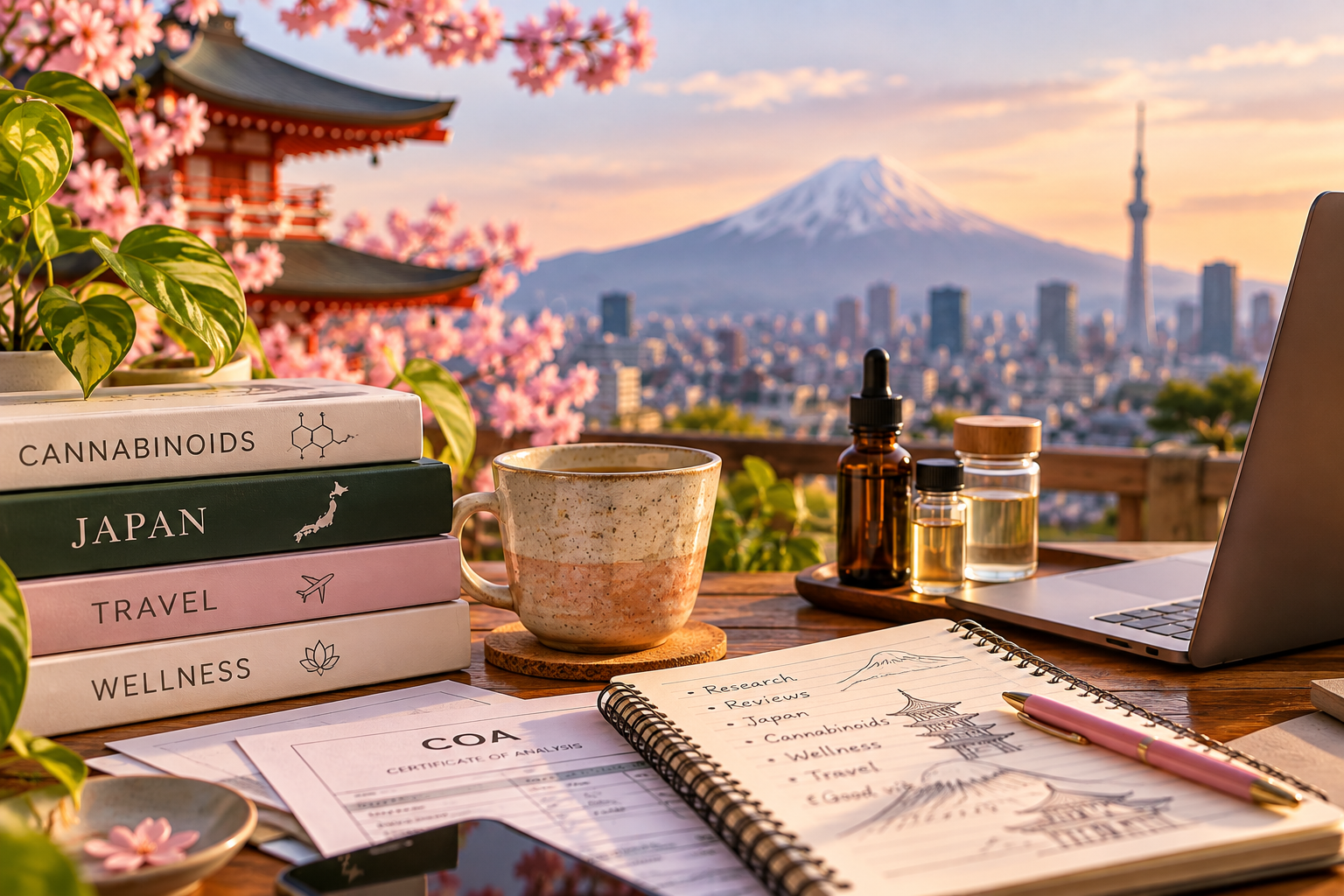
A COA is not a tiny laminated halo that makes every mystery molecule automatically wholesome. But good documentation can tell you considerably more than a flashy product page.
Before considering a product, I like to see a current, batch-specific COA (Certificate of Analysis) rather than one dusty PDF from the dawn of time; a clear cannabinoid profile and concentration; THC testing relevant to current Japanese requirements for that product type; additional contaminant testing where available, including heavy metals and residual solvents; real company details and contact information; and an explanation of what the ingredient actually is instead of nothing but a flashy acronym and a neon galaxy label.
I also want the information to be recent, because this market does not sit still politely.
A COA cannot predict your exact experience, independently establish every aspect of legal compliance, or answer every possible safety question. But transparency matters, and current documentation gives you considerably more useful information than marketing copy alone.
Related article: How to Read a COA in Japan: Decoding Certificates of Analysis for Cannabinoid Products
How Should Beginners Approach Altnoids?
With caution and good information. Stronger effects, unfamiliar ingredients, high-concentration products, edibles, and formulas containing several cannabinoids can make experiences less predictable, particularly for someone without much experience with psychoactive cannabinoid products. Avoid driving or operating machinery while impaired, and be especially cautious about combining unfamiliar psychoactive products.
And yes, perhaps postpone major life decisions and experimental home haircuts too. Trust me on that one. 😂
If a product makes you feel unwell, anxious, confused, overly sedated, or otherwise uncomfortable, stop using it. If symptoms are severe, concerning, or do not improve, seek appropriate medical help.
Most importantly, don’t let an impressive percentage, shiny packaging, or the word ULTRA substitute for knowing what is actually in the product.
The Bottom Line
Cannabinoids are the broad family of compounds associated with cannabis and hemp. Altnoids are an informal newer-market category: alternative cannabinoids often marketed outside traditional THC cannabis products, many of which are made through chemical conversion of hemp-derived compounds.
They are not all the same. A compound’s name does not automatically tell you whether a particular product is safe, compliant with current law, mild, strong, or well tested.
The sensible approach isn’t to chase every new acronym. Leave that part to me. 😂 Instead, pay attention to transparent documentation, current regulatory information, what is actually in a product, and maintain a healthy suspicion of anything marketed as THE NEXT BIG THING without adequately explaining what that thing even is.
For a current, Japan-specific look at compounds that are appearing, disappearing, or changing status, read: What Altnoids Are Available in Japan?
Quick FAQ: Altnoids
What does “altnoid” mean?
“Altnoid” is informal shorthand for an alternative cannabinoid product, usually one marketed outside conventional THC cannabis. It is not a formal scientific classification, so brands and consumers may use the term differently.
Are all cannabinoids altnoids?
No. Cannabinoids are the broad umbrella. CBD, CBG, THC, CBC, and CBN are cannabinoids. “Altnoid” usually refers to newer or alternative cannabinoid products, particularly chemically converted or semi-synthetic compounds.
Are altnoids natural?
Some cannabinoids occur naturally in cannabis. Many products described as altnoids contain compounds made through chemical conversion of hemp-derived starting materials. “Natural” and “semi-synthetic” describe origin or production route. They do not, by themselves, establish quality, legal status, or safety.
Are altnoids legal in Japan?
It depends on the exact substance, the particular product and formulation, applicable THC limits, and the regulations in force at the relevant time.
Mary Jane in Japan only features current-market cannabinoid products and ingredients that I understand, based on the information available to me at the time of writing or updating, to be legally marketed in Japan. I do not knowingly feature prohibited substances as current consumer options.
However, that is not a legal determination or guarantee of compliance. Japan’s regulations can change quickly, and products sold under the same ingredient name may have different formulations. Always check current official information and current product documentation rather than relying solely on an older article, review, or commercial listing.
Does a COA prove a cannabinoid product is safe?
No. A current, batch-specific COA is an important transparency tool, but it does not guarantee safety, establish every aspect of legal compliance, or predict your individual experience. It is one useful piece of the bigger picture.
Why can two products with the same cannabinoid feel different?
Dose, formulation, terpenes, other cannabinoids, delivery method, tolerance, food, mood, setting, and individual biology can all affect the experience. The label is only one part of the story.
Disclaimer
Mary Jane in Japan is an independent informational and review blog based on my own research, opinions, and personal experiences with products I understood to be legal in Japan at the time of testing and publication.
Nothing on this site is medical or legal advice, and I do not encourage anyone to break the law. Cannabinoid regulations and product formulations can change quickly, so always check the latest information before purchasing or using any product.
Cannabinoids affect everyone differently. My experience is my experience — not a promise of yours.
Stay curious, stay safe, and stay legally lifted. 🍃
Mary Jane in Japan
Leave a Reply