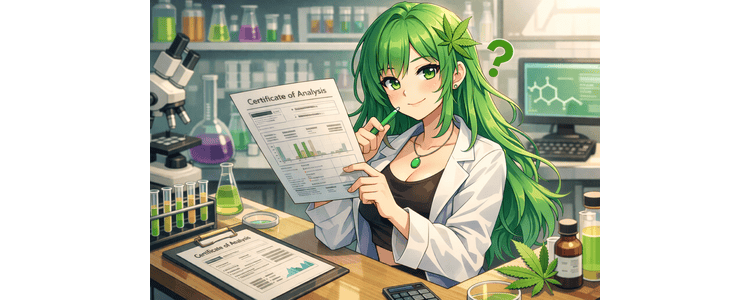
If you’ve been hovering around Japan’s alternative cannabinoid scene (as one does), you’ve probably seen brands dropping the phrase “COA available” like it’s a badge of honor. And it is.
But here’s the real question: Do you actually know how to read a COA in Japan?
Because a Certificate of Analysis isn’t just a PDF attachment brands throw around to look official. It’s the one document that tells you whether what you’re inhaling is what you think you’re inhaling (and that it’s legal in Japan). So let’s decode it — beginner-friendly, but with enough depth to make the lab nerds nod approvingly.
First: What Is a COA?
A COA (Certificate of Analysis) is a lab report issued by a third-party testing facility. It shows exactly what’s inside a product.
For cannabinoid products in Japan, that usually means:
- Cannabinoid potency
- THC content (this is important)
Think of it like the nutritional label… but for your brain.
Check the Lab Information (Is It Legit?)
Before you even look at numbers, check:
- Lab name
- Lab address
- Accreditation (ISO certification, etc.)
- Date of testing
- Batch number
If no batch number matches the product you’re holding? 🚩 If the lab name looks vague or unsearchable? 🚩 If the report is undated? 🚩
A real COA should clearly connect to a specific batch of a specific product.
Cannabinoid Potency: What’s Actually in It?
This is the fun part.
You’ll usually see a table listing cannabinoids and percentages. For example:
| Cannabinoid | Result (%) |
|---|---|
| 9R-H4-CBD | 68% |
| 9S-H4-CBD | 27.8% |
| Δ9-THC | ND |
| TOTAL CANNABINOIDS | 95.8% |
A few key terms:
- ND = Not Detected
- LOQ = Limit of Quantification
- % = percentage by weight
Also important in Japan:
Δ9-THC must be below the legal limit. If it shows anything significant? That product is playing with fire.
The Date Matters More Than You Think
Japan’s cannabinoid laws shift faster than a Tokyo trend cycle.
If a COA is from:
- Two years ago
- Before a regulatory update
That’s… not ideal. Fresh batch-specific testing is what you want.
Raw Material vs Finished Product COAs (Especially in Japan)
This is where things get interesting — and very Japan-specific.
In Japan’s alternative cannabinoid market, most publicly available COAs are for raw materials, not finished retail products. That means the lab report usually reflects a tested distillate or isolate (for example, “H4CBD 90% raw material”) before it’s blended into a vape cartridge, syrup, or other final form.
A raw material COA confirms important things:
- The cannabinoid percentage of the base ingredient
- Δ9-THC compliance
What it doesn’t necessarily confirm is:
- The final potency after dilution
- The exact ratios in the finished vape
- Added terpenes
- Whether contamination occurred during formulation
Ideally, from a full transparency standpoint, you’d see both:
- A raw material COA
- A finished product COA tied to the exact retail batch
And while finished product COAs are still relatively uncommon in Japan’s altnoid space, there are brands raising the bar. For example, Kush JP provides COAs for each finished product they sell — meaning the lab report reflects the exact retail item, not just the bulk ingredient. That level of transparency is significant, especially in a fast-moving regulatory environment.
Understanding the difference between raw ingredient testing and finished product testing helps you read COAs with sharper eyes — and recognize when a brand is going the extra mile.
Red Flags I Personally Watch For
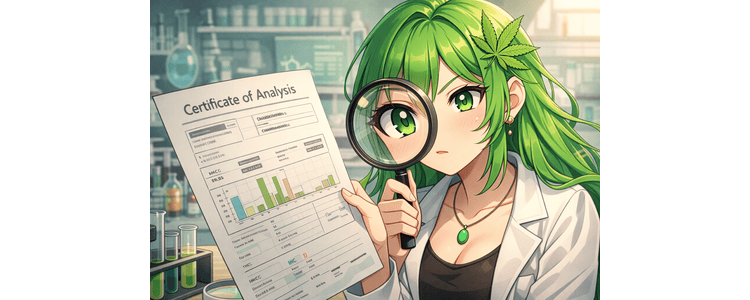
Over time, you develop a spidey sense. Mine tingles when:
- The formatting looks edited or inconsistent
- The percentages look too perfect
- There’s no lab contact information
- The COA is just a cropped screenshot
- The QR code links to a generic homepage instead of a batch report
Transparency shouldn’t feel like pulling teeth.
Final Thoughts: Read the Paper Before You Puff
Japan’s alternative cannabinoid market moves fast. A COA is your only objective snapshot of what’s inside. And while yes, I love a beautifully designed product with a killer terpene profile… I love a clean lab report more. Because nothing ruins a chill evening like wondering whether you just inhaled mystery chemistry. Thankfully, there are brands in Japan who have both!
Learning how to read a COA in Japan is the next step in becoming informed, or as least as much as we can be about this stuff. The brands worth supporting won’t hesitate to share clear, batch-specific, third-party lab results. In fact, they’ll be proud of them.
And if you ever feel unsure? Ask. A good vendor will answer confidently. A shady one will deflect. And that tells you everything.
Stay lifted 🍃
Quick note: This post may contain affiliate links. If you purchase them, it helps support Mary Jane in Japan and keeps this site running. Thank you! As always, opinions here are my own.




Leave a Reply